
Seborrhoeic keratosis removal in Norwich
Noticed a rough, crusty patch on your skin that was not there recently?
It might be causing you a little worry, but it will often turn out to be a seborrhoeic keratosis, and we see a fair bit of it at our clinic in Poringland, Norfolk. This page covers what these growths are, how to tell them apart from the things people confuse them with, and also how we remove them.
What is a seborrhoeic keratosis?
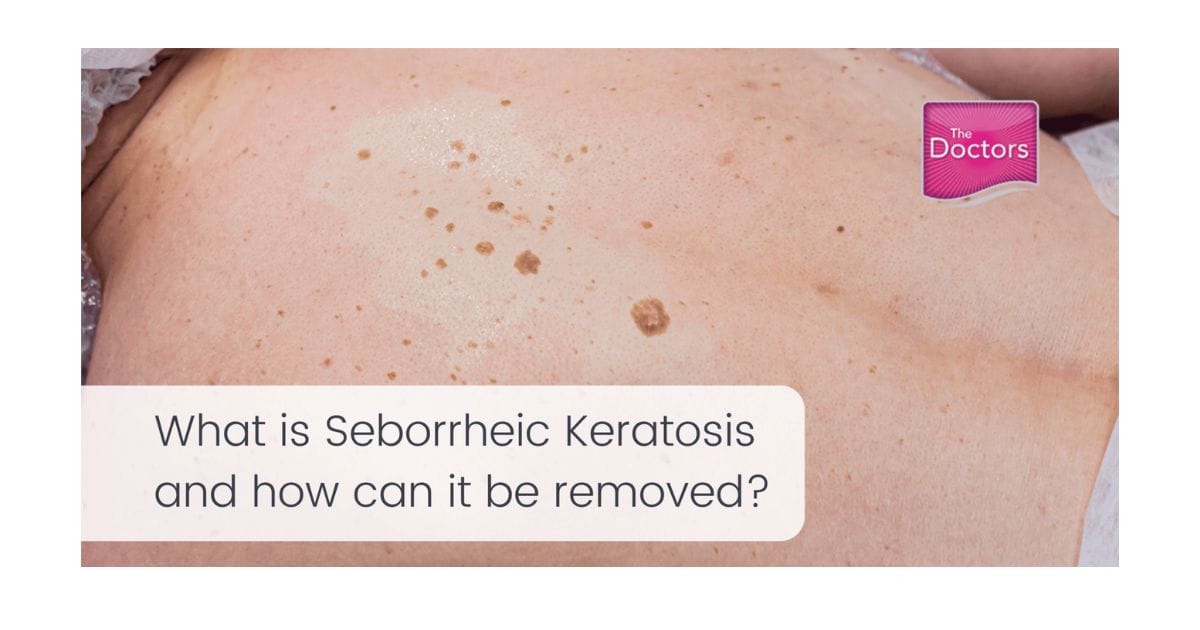
A seborrhoeic keratosis is a harmless growth on the surface of the skin. They start off as small rough bumps and thicken and enlarge over time into raised, wart-like patches. Most are brown or tan. Some are black, some almost white. They often look waxy, as though they have been stuck onto the skin rather than grown out of it.
Sizes range from a few millimetres to the size of a large coin. They can itch. They do not usually hurt unless something catches them.
You may also hear them called senile warts, seborrhoeic warts, or brown warts. Those are the same growth under an older name. None of them are true warts.
Where do they appear?
Anywhere on the skin, but most often on the chest, back, scalp, face and neck.
They do not appear on the palms of the hands or the soles of the feet.
What causes them?
Nobody fully knows. What is understood:
- They run in families. If your parents had them, you are more likely to get them.
- They become more common from middle age onwards.
- Once you develop one, more tend to follow.
- Some people develop them during pregnancy or after hormone treatment.
- Sun exposure may play a part, though they also appear on skin that never sees daylight, and under the hair.

Will it spread?
This is the question we are asked most, and the answer is reassuring.
A seborrhoeic keratosis cannot spread across your skin. It is not an infection, and there is nothing in it to pass from one patch of skin to another.
What does happen is that people develop more of them with age, often in the same general area. New growths appearing near an old one look like spreading. It is not. Each one has formed on its own.
Removing one does not cause more to appear, and a properly removed growth does not usually come back in the same spot. You may still develop new ones elsewhere over time.
Are they contagious?
No. You cannot catch a seborrhoeic keratosis, and you cannot pass one to anybody else.
This is worth stating plainly because of the name. A true wart is caused by a virus and is contagious. A seborrhoeic wart, despite the name, is not a wart and has no virus in it. Sharing a towel, a bed, or a swimming pool carries no risk.
When you should get a growth checked
A confirmed seborrhoeic keratosis is harmless. The important word here is confirmed.
These growths can look very much like a mole, a true wart, an actinic keratosis, or a skin cancer. Nobody can tell the difference reliably by looking at a photograph, and that includes us.
Get a growth looked at if:
- It is new, and you are not sure what it is
- It has changed shape, size or colour
- It bleeds, crusts over, or will not heal
- It has more than one colour in it
- Its edges are ragged or uneven
Book in with us, or see your own GP. What matters is that somebody looks at it properly.
Every patient who comes to us is seen by an experienced doctor before any treatment happens. Some growths, particularly pigmented ones that are changing, need to be cut out and examined under a microscope to rule out cancer. That is a job for a dermatologist, and we will tell you plainly if we think you need a biopsy.

Seborrhoeic keratosis removal at The Doctors Laser Clinic
Where removal is appropriate, we use the Alma CO2 laser.
The laser removes the growth layer by layer and leaves the healthy skin around it largely untouched.
- ✓No cutting
- ✓No bleeding
- ✓Minimal damage to the surrounding skin
- ✓Reduced risk of scarring compared with cutting the growth out
As with all treatments, results vary from person to person.
Removal is a cosmetic decision in most cases. A seborrhoeic keratosis does not have to be treated. People usually choose removal because a growth catches on clothing or jewellery, sits somewhere they would rather it did not, or simply just bothers them.
What happens at your appointment
Our team will look at the growth, confirm what it is, and talk you through the options.
We have two lasers for this treatment, CO2 and Erbium. Which one we use depends on the type of lesion and is decided after your doctor has examined it.
The appointment runs around 30 to 60 minutes. Most of that is talking. The lasering itself is usually over in a matter of minutes.
You are not asked to decide on the spot. There is a cooling-off period built in, and you go away and think about it.
Does it hurt?
Not usually. Removing a skin lesion is normally a painless procedure, and you will be offered numbing options beforehand, either a local or a topical anaesthetic. The laser itself creates a warm sensation. Many people do not even feel that.
Aftercare and healing
You go home with aftercare instructions, and we go through them with you before you leave.
Your consultation includes a realistic assessment of the scarring risk for your particular growth. We aim for none, and we will tell you honestly if that is not achievable in your case.
Common questions
Should I be worried about a seborrhoeic keratosis?
Once it has been confirmed as a seborrhoeic keratosis, no. They are harmless, and they do not turn into skin cancer. The reason to get one checked is that other growths can look similar, not that this one is dangerous.
What does a seborrhoeic keratosis look like?
A raised, rough, waxy patch that looks stuck onto the skin. Usually brown or tan, sometimes black or pale. Anything from a few millimetres to the size of a large coin. They thicken and darken slowly over years.
Is a seborrhoeic keratosis contagious?
No. There is no virus involved and nothing to pass on.
Will it come back after removal?
A growth that has been removed properly does not usually return in the same place. You may develop new ones elsewhere as you get older, which is normal.
Does removal hurt?
Not usually. You will be offered a local or topical anaesthetic before treatment. The laser creates a warm sensation, and many people do not even feel it.
Will the NHS remove it for me?
Usually not. The NHS treats most benign skin growths as cosmetic, and anything diagnosed as an innocent lesion is likely to be turned down. That is why people come to us.
Can you remove more than one at a time?
Yes, but it will depend on your particular case. Please mention this during your consultation.
Let us see it
Not sure what you are looking at? Book a consultation, and we will give you all the information you need.
The Doctors Laser Clinic, Poringland, Norwich
01603 360360
info@laserdocs.co.uk
Medically reviewed by Dr Malcolm Willis


One Response
Hi there
I have three rather large seborrheic warts on my head and forehead and would like them removed
My GP assures me they are benign but they are starting to look unsightly
Could you give me a quote on how much this may be likely to cost please ?